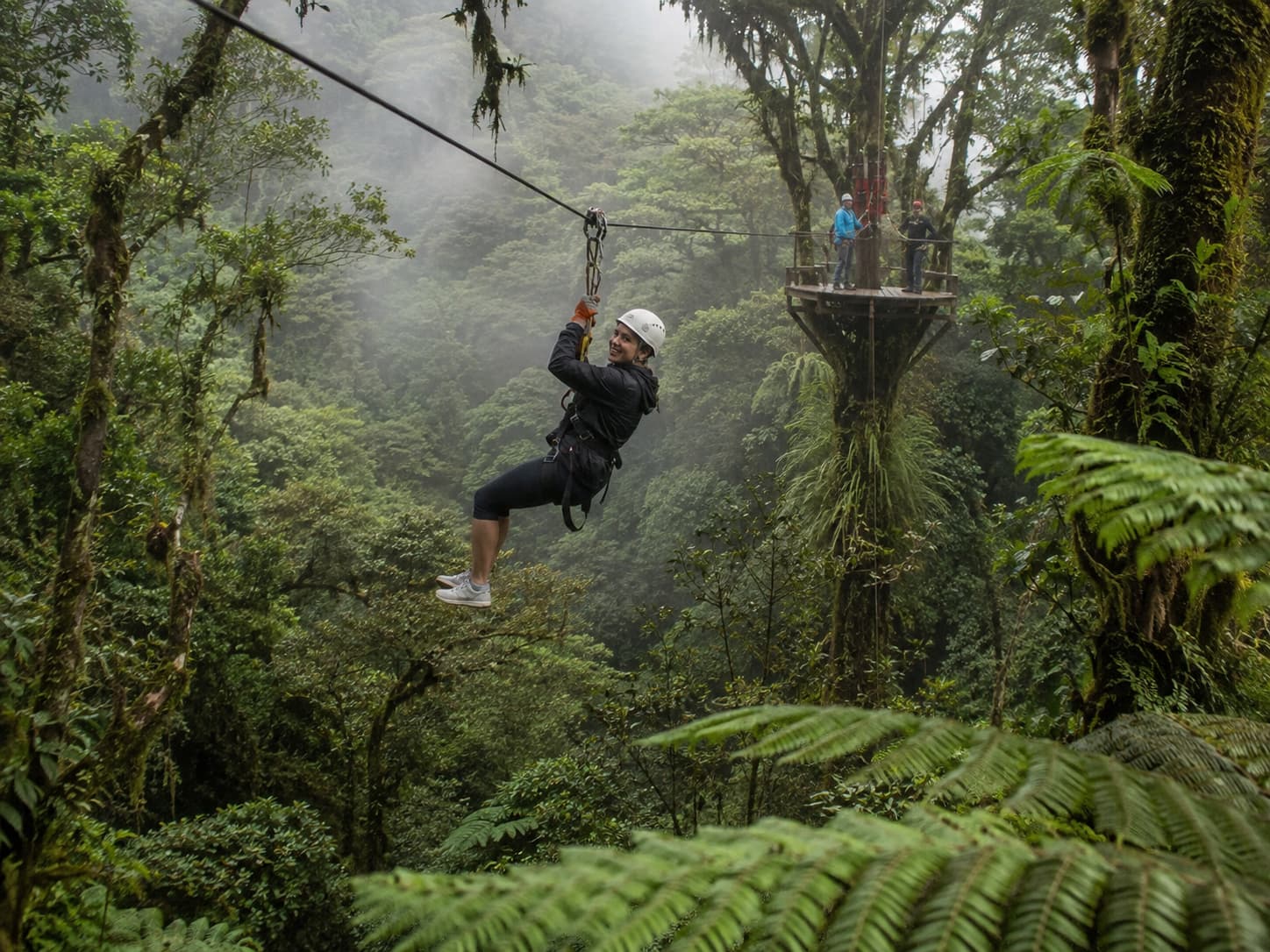
There are two kinds of vacation. One leaves you softer than you arrived, a week of sitting and eating and not much else. The other actually moves you, and you come home feeling stronger than when you left. A trip to the Monteverde Cloud Forest is firmly the second kind, if you plan it that way.
This corner of Costa Rica sits around 4,900 feet up in the Tilarán mountains, wrapped in permanent mist. Getting the most out of it means moving your body, whether that is a steady hike on a mossy trail, a long walk across suspension bridges in the canopy, or a full-adrenaline zipline through the clouds. It is genuine physical activity in one of the most biodiverse places on the planet, and the growing body of research on how nature lowers stress and improves wellbeing makes it about as healthy as travel gets.
The trick is matching the activity to your fitness level and how hard you want to push. Some people want a gentle birding stroll. Others want their heart rate up. A few want to fly.
A couple of things decide whether the day works. A good naturalist guide is the difference between walking past the wildlife and actually seeing it, because most of the forest’s life is invisible to an untrained eye. Small groups matter for both wildlife and pace. Reserves cap numbers and run timed entry, so you book online ahead, especially in the busy dry season. And with ziplines and bridges, you want an operator with real safety standards, not the cheapest cable in town.
Here are the best ways to experience Monteverde, ranked and sorted roughly from gentlest to most intense.
1. Compare and Book It All in One Place
Before you pick a single trail, it helps to see the whole menu. Monteverde Cloud Forest Tours is a platform built specifically around this destination, so instead of piecing together reserves, canopy parks, and guides from a dozen scattered sites, you get the options laid out clearly with the details that actually matter, difficulty, timing, and what each experience involves.
That focus solves the planning problem. You can tell a gentle birding walk from a strenuous hike, figure out which reserve suits your energy level, and line up an early slot before the trails fill. First timers stop guessing, and active travelers can build a day that genuinely challenges them rather than a slow shuffle behind a big group.
You can compare Monteverde reserves, tours, and difficulty levels here and book the right mix before you arrive, which matters more here than almost anywhere, because the best morning slots sell out in peak season and the roads in are slow.
Best for anyone who wants to plan an active trip properly rather than wing it. If you already know exactly which reserve you want, book that directly.
2. The Classic Cloud Forest Hike: Monteverde Biological Reserve
This is the flagship, and for good reason. The Monteverde Cloud Forest Biological Reserve has thirteen trails, including the Continental Divide route out to the La Ventana viewpoint, where on a clear moment you can see toward both coasts. It is proper hiking, uneven ground, roots, gentle climbs, exactly the kind of low-impact cardio that feels nothing like a treadmill.
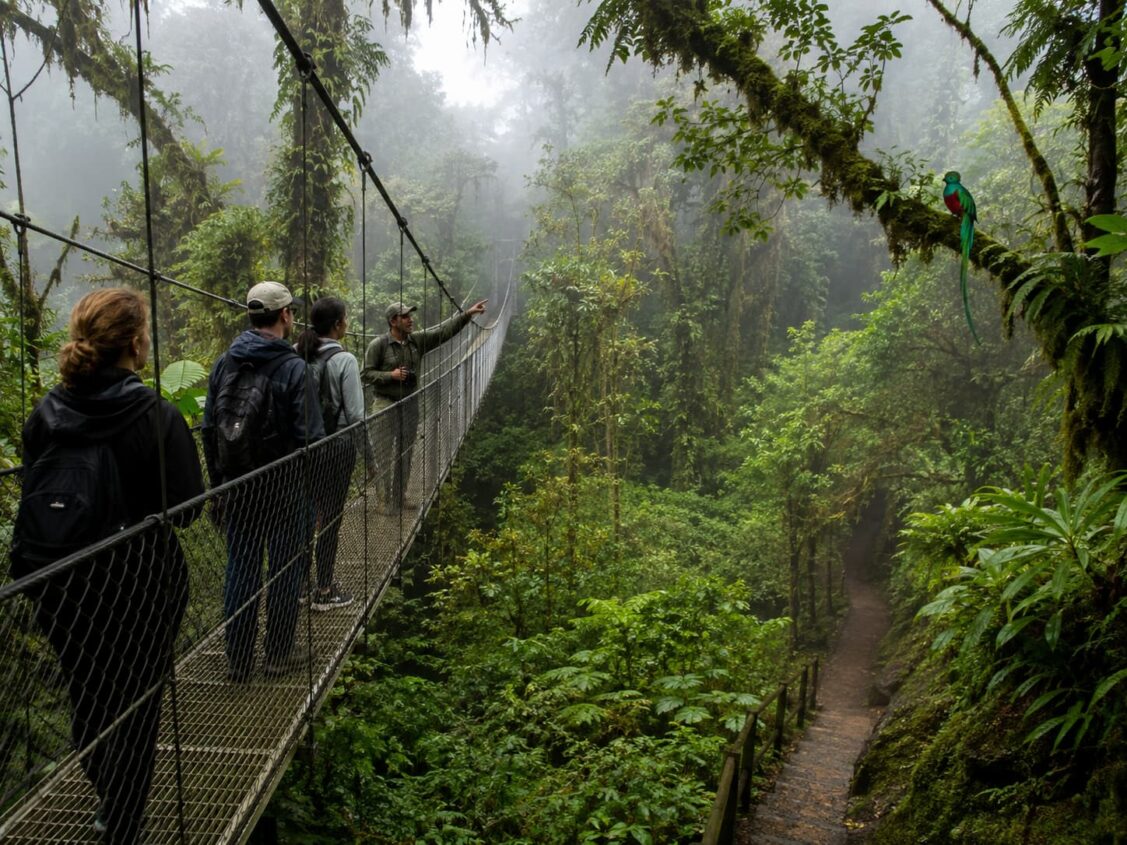
Go early. The first slot around 7:30 in the morning gives you active wildlife and quiet trails before the mid-morning crowds arrive. A guide with a spotting scope massively improves your odds of seeing the resplendent quetzal, especially during breeding season from February into July.
Entry runs around twenty-five to twenty-nine dollars, and you check in at the visitor center first. The trails are well marked enough to walk self-guided, but you will see far less without a naturalist.
Best for hikers and birders who want the full, iconic cloud forest on foot. Not the pick if you have real mobility limits or want pure thrill.
3. The Quiet Birding Walk: Curi-Cancha Reserve
If your idea of a reset is a slower, calmer walk with your eyes up in the trees, Curi-Cancha is the one. It caps visitors at fifty at any time, so it never feels crowded, and over 200 bird species have been recorded here. For quetzal sightings specifically, the smaller crowds often give it the edge over the main reserve.
The walking is gentler than the flagship, with a mix of open clearings and forest that makes wildlife easier to spot. It is the closest thing here to a moving meditation, the sort of low-intensity activity that clears your head without wearing you out. Entry is about twenty dollars, and it is open daily from 7 in the morning until 3.
Best for birders, photographers, and anyone who wants a peaceful nature walk over a workout. Serious adrenaline seekers will find it too mellow.
4. Canopy Walking: Selvatura Park Hanging Bridges
Walking the hanging bridges is where the forest opens up. Selvatura runs a circuit of around three kilometers of trails linked by eight suspension bridges that carry you up into the canopy itself, eye level with the treetops. It is moderate, steady activity, more accessible than a full trail hike but still a proper walk with some elevation.
The park also stacks on extras, a zipline course, a butterfly and hummingbird garden, a sloth exhibit, so it works well for families or mixed groups where not everyone wants the same intensity. You get the movement and the views without needing to be especially fit.
Best for travelers who want canopy-level scenery and light-to-moderate activity. If you came purely for silence and birds, the busier park atmosphere may not suit you.
5. The Full Adrenaline Hit: 100% Aventura Ziplines
For the highest heart rate of the trip, this is it. Monteverde is credited as the birthplace of the canopy tour, and operators like 100% Aventura run some of the longest ziplines in Latin America, plus a Superman line where you fly face-first and a Tarzan swing that is basically a giant pendulum drop through the trees.
This is intense, exhilarating, and not for the faint-hearted, but it is also well run by operators with serious safety standards and modern gear. The physical demand is more about nerve than fitness, though you will use your core and grip more than you expect.
Best for thrill-seekers and anyone who wants their adventure with a jolt of adrenaline. Skip it if heights genuinely frighten you or you want a calm day in nature.
A Few Practical Things Before You Go
Give Monteverde at least two full days. One for a serious reserve hike, one for canopy bridges or ziplining, with a night walk in between if you can, which is when the sloths, frogs, and kinkajous come out.
The dry season from December to April brings firmer trails and clearer mornings, ideal for hiking. The green season from May to November means fewer crowds and lush forest, with heavier rain in September and October. Whichever you choose, mornings are best, both for wildlife and for beating the buses.
Book your reserve slot and any zipline online in advance during peak months, because the good morning times fill fast. The official Monteverde reserve site handles timed entry, and for planning the wider trip the official Visit Costa Rica tourism site is a clean starting point. Both pair well with any related Costa Rica travel guides already on the site.
Pack layers and a light rain jacket no matter the season, because it stays around 18 degrees Celsius and the mist is constant. Wear proper trail shoes with grip, because the paths get slick. Bring water and, if you have them, binoculars.
Choosing the Right One for You
Monteverde rewards travelers who match the activity to their body and their mood.
Start by comparing your options through Monteverde Cloud Forest Tours so you plan an active trip with a clear head. Want the classic hike, head to the Monteverde Biological Reserve. Want a calm, restorative walk, choose Curi-Cancha. Want canopy views with moderate effort, walk the Selvatura bridges. Want your pulse pounding, go zipline with 100% Aventura.
A trip like this is a reminder that staying active does not have to mean a gym. Some of the best movement you will ever do is on a misty trail with a quetzal somewhere in the branches above you. Pick your level, keep moving, and you will come home better than you left.
Author note: recommendations here are based on well-established reserves and operators with strong safety records. Prices, hours, and seasonal conditions change, so confirm the current details directly before you book.